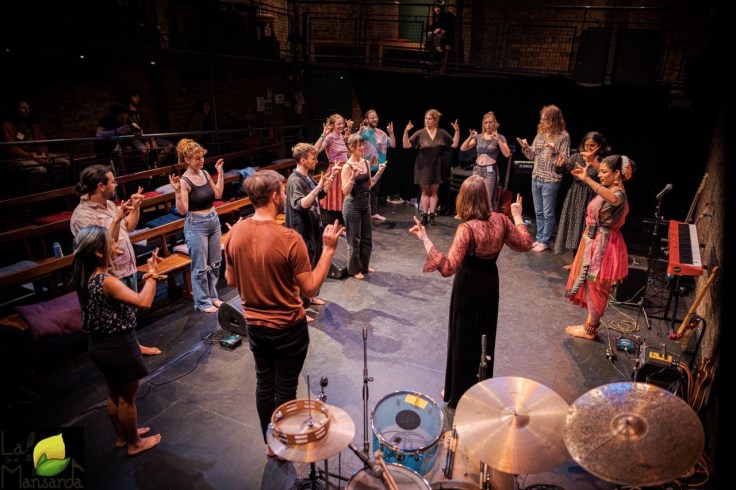
As part of an initiative by La Mansarda in support of UNICEF, I conducted an open-level Bharatanatyam workshop designed for participants with little to no prior dance experience. This event was not only a celebration of movement and cultural exchange, but also a heartfelt effort to give back — with all proceeds donated to UNICEF in aid of underprivileged children.
The session focused on introducing the fundamentals of Bharatanatyam in an engaging and accessible way. Participants explored basic adavus (movement units), expressive gestures (mudras), and simple rhythmic patterns, while gaining a deeper understanding of the narrative power that defines the dance form. My aim was to create an inclusive and welcoming space where anyone — regardless of background or training — could experience the joy and emotional richness of Indian classical dance.
“I’m not a dancer, but I felt completely at ease. The atmosphere was warm and inclusive, and I walked away feeling inspired and connected to a new culture!” – Workshop Participant, Ireland
Workshops like this reaffirm my belief in the universal language of art and its ability to connect, uplift, and serve. I’m always open to collaborating on socially conscious, community-oriented projects that bring dance to wider audiences!
Indian Classical Dance Workshop – Irish World Academy
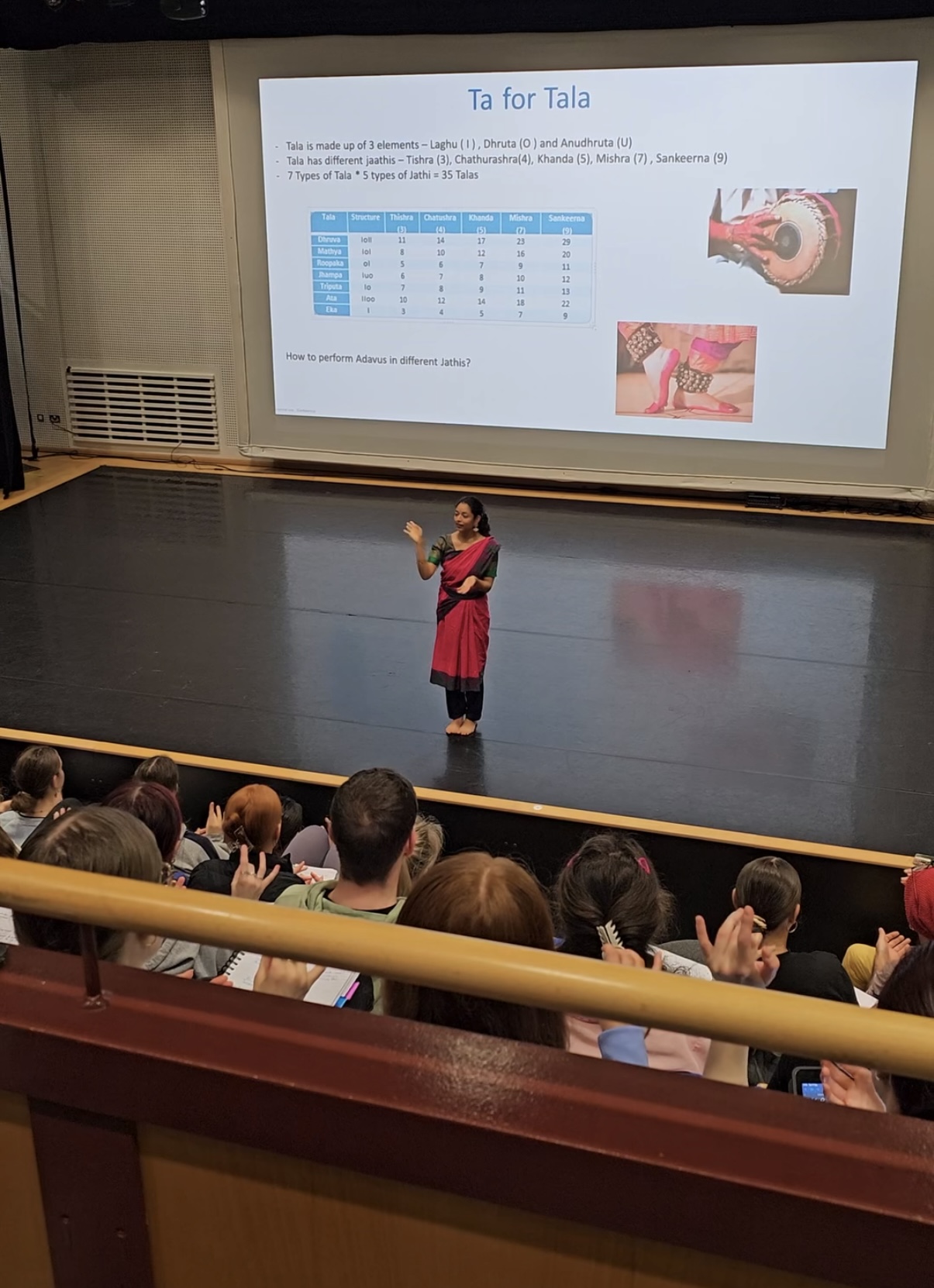
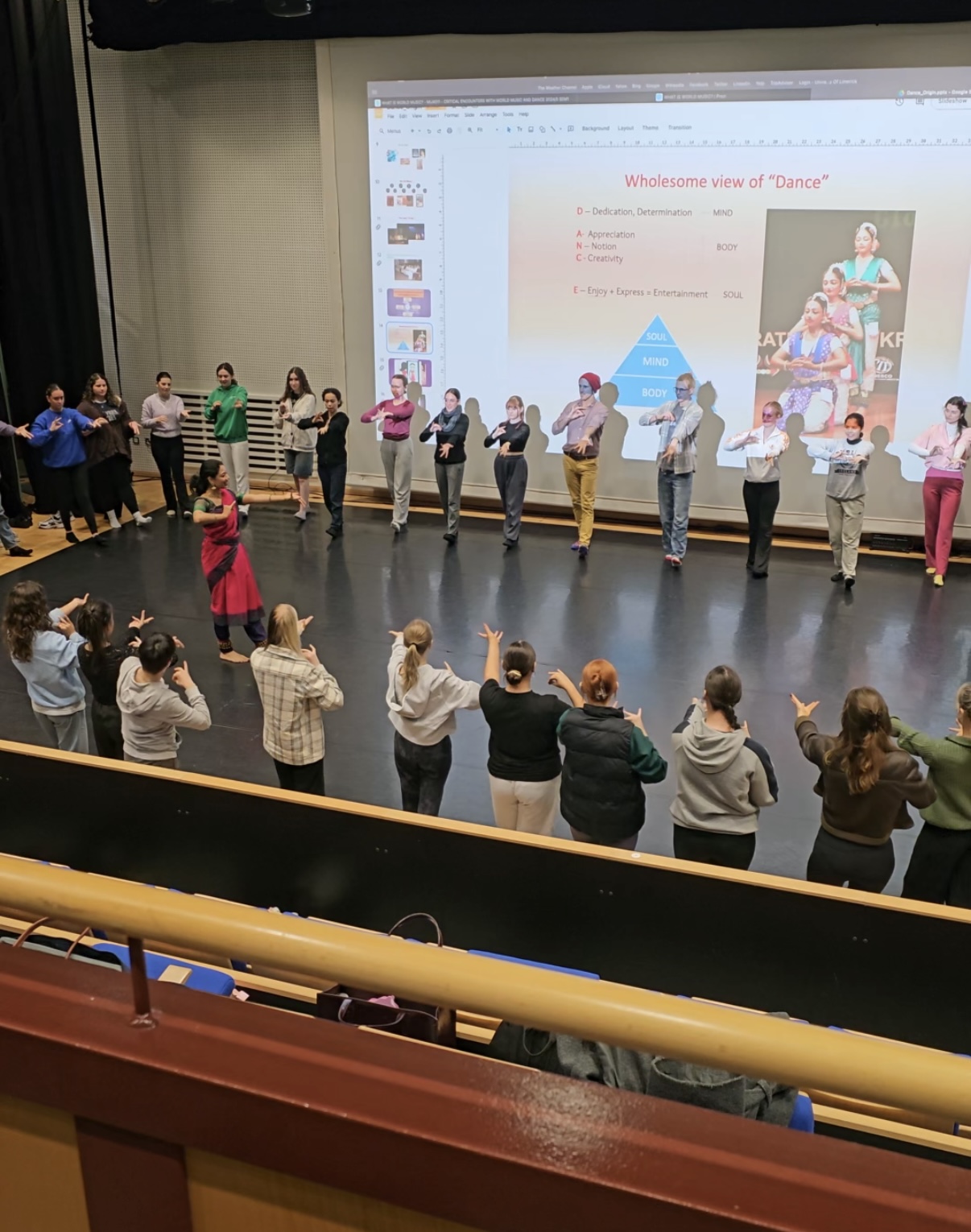
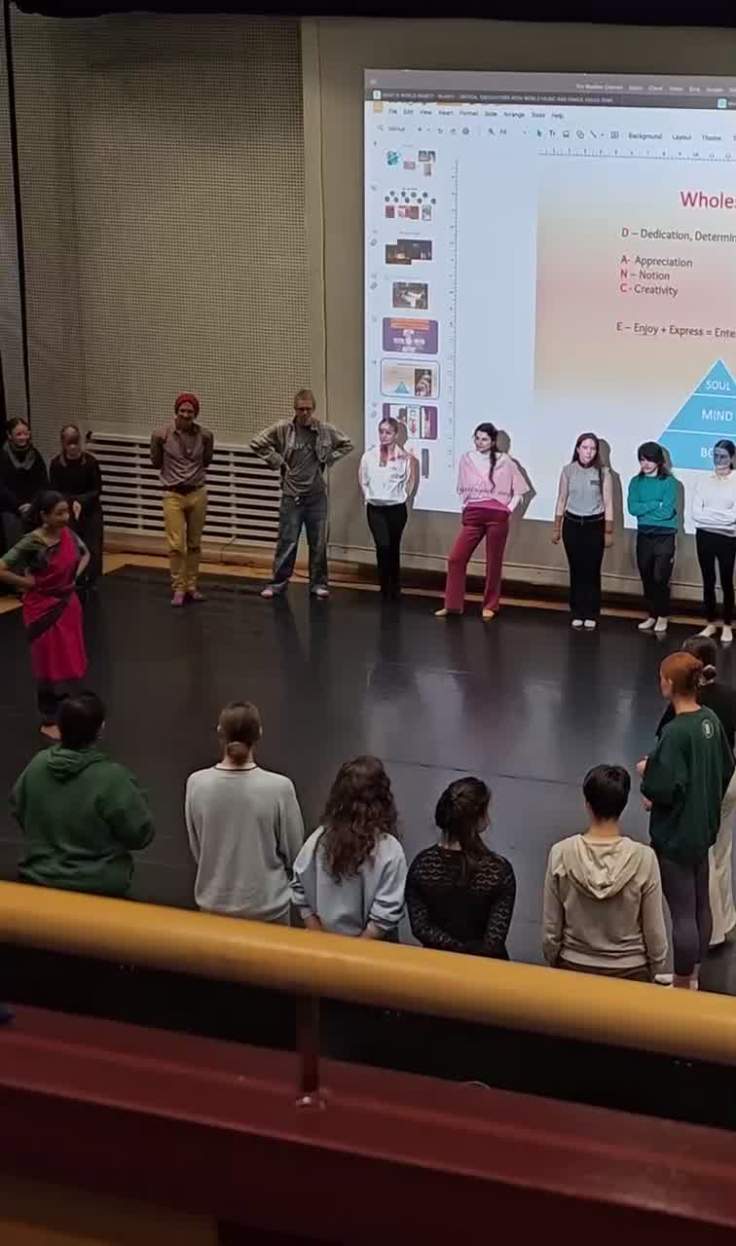
During my time in Ireland, I had the opportunity to conduct an immersive workshop on Bharatanatyam for music students at the Irish World Academy of Music and Dance. Drawing from my dual background in Indian classical dance and Western classical music, I designed a module that created meaningful intersections between the two traditions.
The workshop introduced students to the foundational structures of Carnatic music, emphasizing its rhythmic complexity and how it parallels the framework of Western classical compositions. Through practical exercises, students explored tala (beat cycles), engaged with the expressive vocabulary of mudras (hand gestures), and delved into the essence of rasa — the emotional storytelling that lies at the heart of Bharatanatyam.
My goal was to create a space where students could not only observe but experience the layered richness of Indian classical dance and music in a way that resonated with their own musical training. The response was both thoughtful and curious, and it reinforced my belief in the power of cross-cultural artistic dialogue.